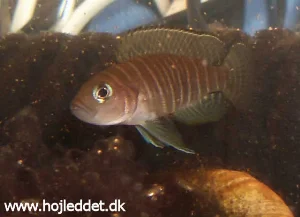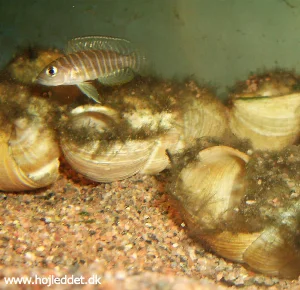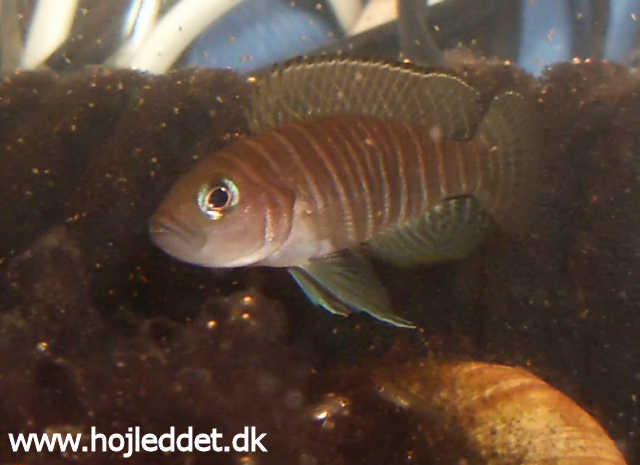
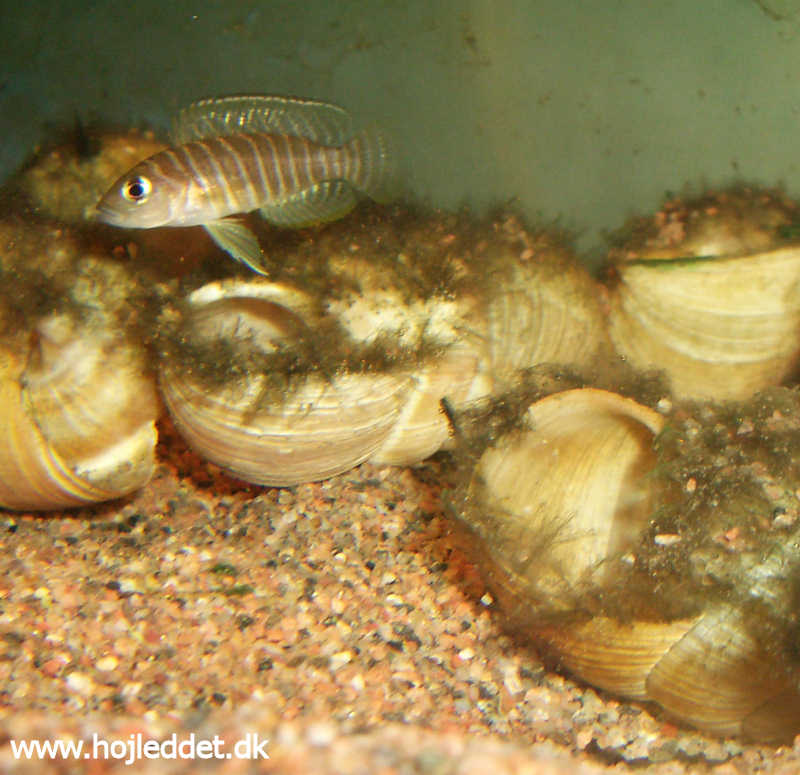
In my 148-liter tank, I keep a small colony of Neolamprologus similis. They are generally peaceful fish, but don't be fooled by their size; if other fish venture too close to their shells, they are promptly chased away, regardless of their size. I started with three specimens in February 2005, initially keeping them in a 12-liter quarantine tank.
Behavior and Breeding
N. similis are remarkably prolific. Even before I moved my initial stock from quarantine, they had already spawned. Although the first fry didn't survive the transition to a 25-liter tank, it wasn't long before they spawned again. By the time I moved them to my 148-liter tank, the colony had grown to about 10 adults and numerous fry. In the larger setup, fewer fry survive as the N. leleupi often prey on them.
Aquarium Setup
When keeping N. similis, the aquarium should be furnished with a deep layer of fine sand and plenty of snail shells (e.g., Neothauma or escargot shells). There is no need to worry about the placement of the shells; these fish are natural architects and will rearrange and bury them until they are perfectly positioned. Males form harems within clusters of shells. They thrive in temperatures of 24-27°C and the hard, alkaline water typical of Lake Tanganyika ($pH$ 8.0-9.0).
Distinction from N. multifasciatus
While they closely resemble N. multifasciatus, N. similis can be distinguished by their vertical stripes, which extend onto the head and neck area. They are fascinating small cichlids that possess a huge personality despite their tiny stature.