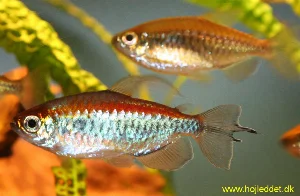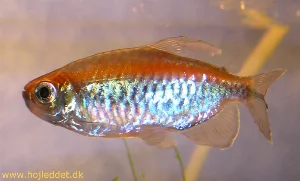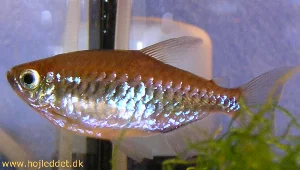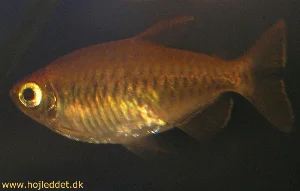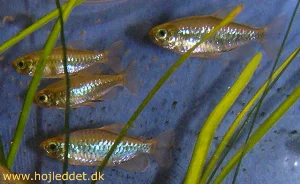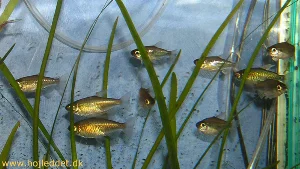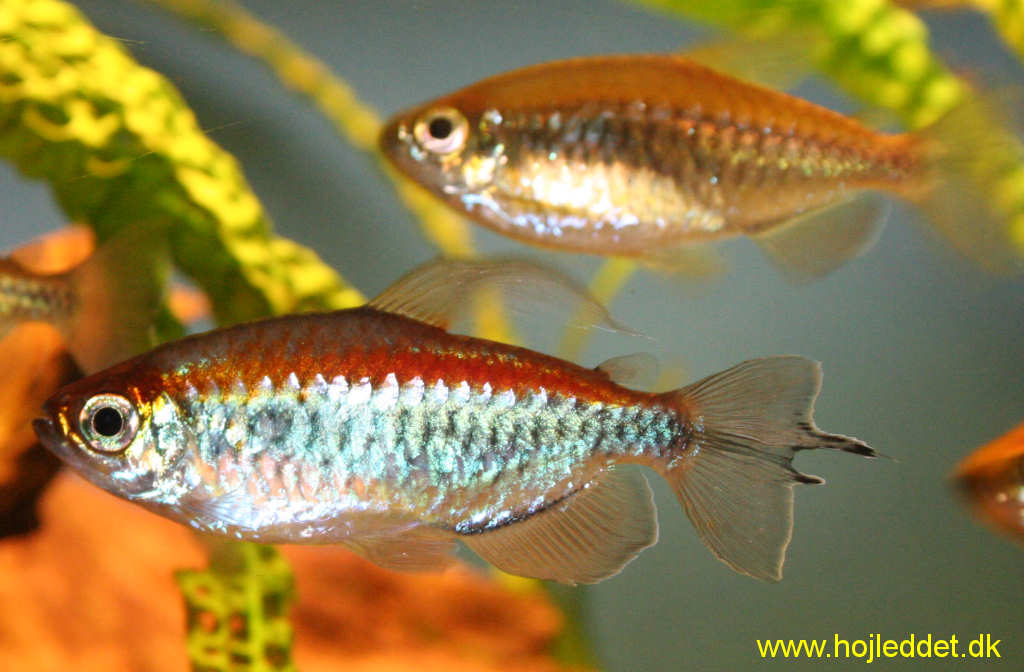
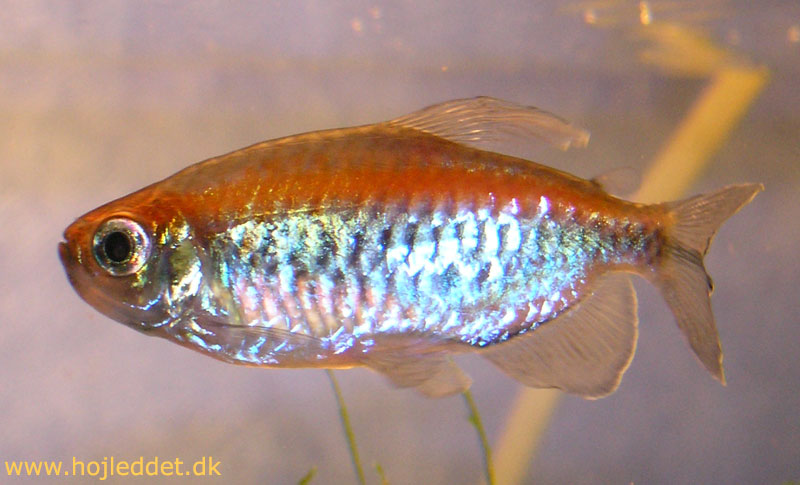
On the cover of the book "The Biotope Aquarium", you see a Congo Tetra (*Phenacogrammus interruptus*) - an understated fish in terms of color at first glance, but I fell head over heels for it back in the last century. While largely silvery, it possesses a fantastic iridescent play of colors, featuring a red-orange shimmer on the back, a bluish hue along the midline, and a whitish belly. Males are particularly striking with their extended fin filaments and a unique middle ray in the caudal fin. Reaching 8-9 cm, it is a large species for a tetra.
In the wild, the Congo Tetra originates from the Congo River Basin in Africa, where it inhabits rivers with moderate currents in large schools. In the aquarium, it requires ample swimming space and thrives best in soft, slightly acidic water with a temperature range of 24-27°C. As a schooling fish, it should be kept in groups of at least 6-10 individuals to ensure natural behavior and security.
I acquired a group of 10, though unfortunately only one was male. In principle, they can be housed with African cichlids. Currently, they reside in my 325-liter community tank alongside Kribensis and Anomalochromis thomasi. Since these species are not overly aggressive, the coexistence is very successful.
Breeding
The Congo Tetra was one of my breeding projects, with attempts made in 2004 and 2005.
First Attempt
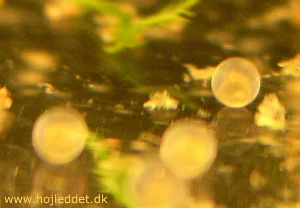
My first attempt was on September 29, 2004. I used a breeding grate in a 25-liter breeding tank filled with 50% tank water and 50% tap water, including some Java moss. The water parameters were pH 8 and conductivity around 800 µS/cm at 25-27°C. On October 1st, I found 12 eggs. Due to the small number, I took no further action, and when the eggs succumbed to fungus, the attempt ended.
Second Attempt
On January 14, 2005, I tried again using a heater (27-28°C) and a mix of one-third tank water. The pH was 8.5 and conductivity was 775 µS/cm. Unfortunately, this attempt yielded similar results with no fry surviving.
Status
I eventually gave up on breeding the Congo Tetra and no longer keep the species, though it remains one of my top favorite African tetras.