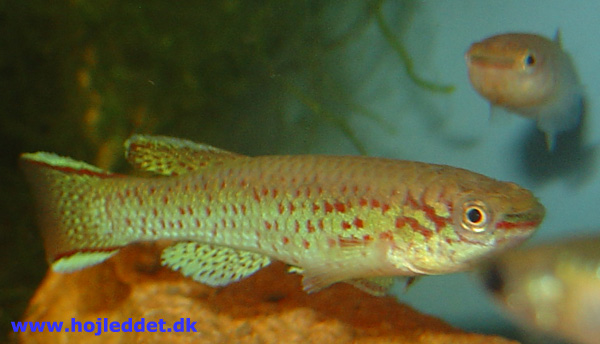
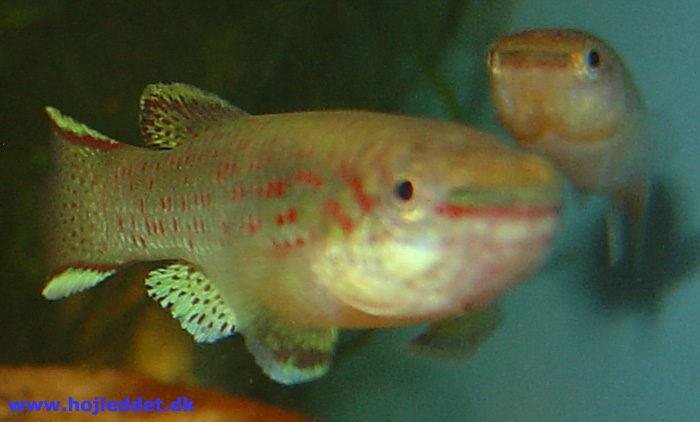
Blue lyretail, Steel-Blue Killifish Blue lyretail, Steel-Blue Killifish

Aquainfo.dk

Fundulopanchax gardneri gardneri "Akure" (Blue Lyretail)

The Java Moss Mystery: Fundulopanchax gardneri gardneri "Akure"

Se galleri
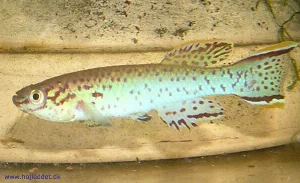
A pair of the "Akure" strain among the aquarium plants.

My journey with the Blue Lyretail began as a complete mystery. In one of my small 20-liter grow-out tanks containing mixed fry, a few strangers suddenly appeared. Initially resembling black mollies, they soon developed broad mouths and striking red spotting. It turned out they were Fundulopanchax gardneri gardneri of the "Akure" location, likely hitching a ride as eggs hidden deep within some Java moss I had recently purchased.

This species is a staple in the killi hobby due to its brilliant coloration and relative hardiness. Originating from the rainforests of Nigeria and Cameroon, they inhabit small streams and ponds. In the home aquarium, they prefer soft, slightly acidic water and dense vegetation. As a semi-annual species, they are prolific spawners, depositing eggs in plants or substrate.

Caution is advised regarding the males; while stunning with their lyre-shaped tails and neon hues, they are fiercely territorial. In confined spaces, a dominant male will often stress or kill rivals, so they are best kept as pairs or in a harem (one male to multiple females). They thrive on a diet of frozen or live foods like mosquito larvae, which is essential for bringing them into breeding condition.
Faktatabel

Quick Stats
Family

Aplocheilidae

Genus

Fundulopanchax

Species

gardneri gardneri "Akure"

Trade Name

Blue lyretail, Steel-Blue Killifish

Origin

Africa, Nigeria

Length

5-6 cm

Tank Size

20 liter

Breeding

Egg-layer (Semi-annual)

Brood Size

40-50

Type

Killifish

Billedgalleri

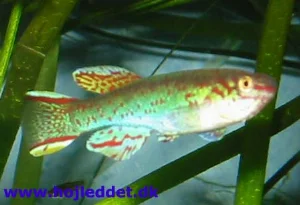
The male in the foreground displaying his colors, with the female behind him.

The male in the foreground displaying his colors, with the female behind him.

A pair of the "Akure" strain among the aquarium plants.

A pair of the "Akure" strain among the aquarium plants.

Close-up of the dominant male.

Close-up of the dominant male.

I lost one of my males, but the prettiest male survived.

I lost one of my males, but the prettiest male survived.

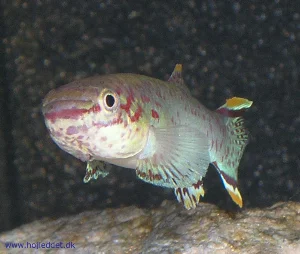
The male seen from the front.

The male seen from the front.

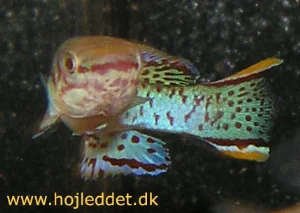
The male from the front again - notice the beautiful tail.

The male from the front again - notice the beautiful tail.

Comments

Diskussion
Vi gennemser alle kommentarer.
C
Chris
2009-01-09 15:16:20
hvor mange grader skal de leve i?
Aquainfo
Mine gik ved 25-27 grader, men de bør vistnok gå ved 23-26 grader efter bøgerne.
P
pluttipigen
2008-09-16 12:25:20
hvor er de flotte.. føder de levende unger eller lægger de æg.. kan man købe dem til selvskabsakvarier noget sted i langdet at du ved? ellers skal jeg da ha købt en stor tot javamos for om heldet skulle være med mig hahaha :D
Aquainfo
De lægger æg og man kan vel godt have dem i et selskabsakvarium hvis de andre fisk er rolige og ikke særlig aggressive. Jeg ved ikke hvor man kan købe dem, det er ikke en af de almindelige fisk hos dyrehandlerne, men man kan kigge på akvariesiden.dk's annoncesektion.
S
søren
2007-05-30 18:32:16
Hvor store Bliver de?
Aquainfo
5-6 cm som der står ovenfor.
M
mille
2007-02-14 12:52:52
får de hurtigt unger vil helst ikke have unger
Aquainfo
Nej, mine fik ikke unger mens jeg havde dem. Til gengæld "fulgte" de med en tot javamos da jeg fik dem, vel at mærke uden at jeg vidste det.