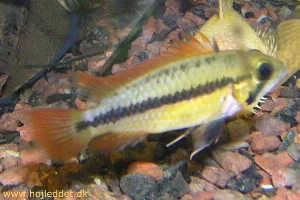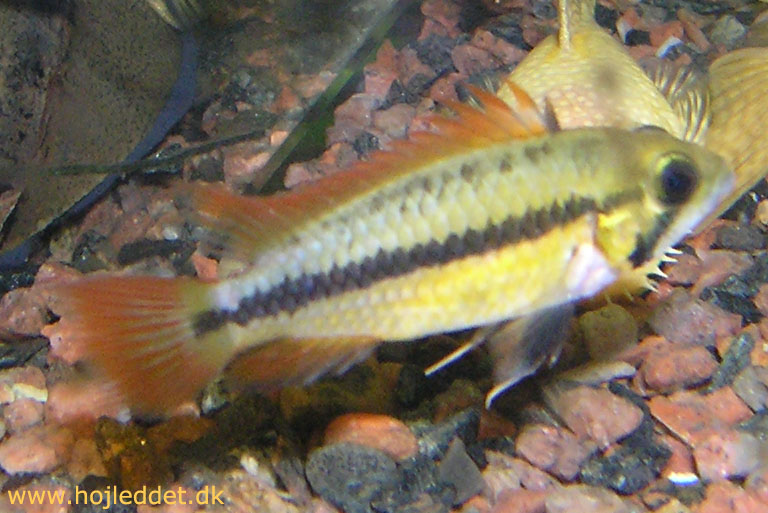
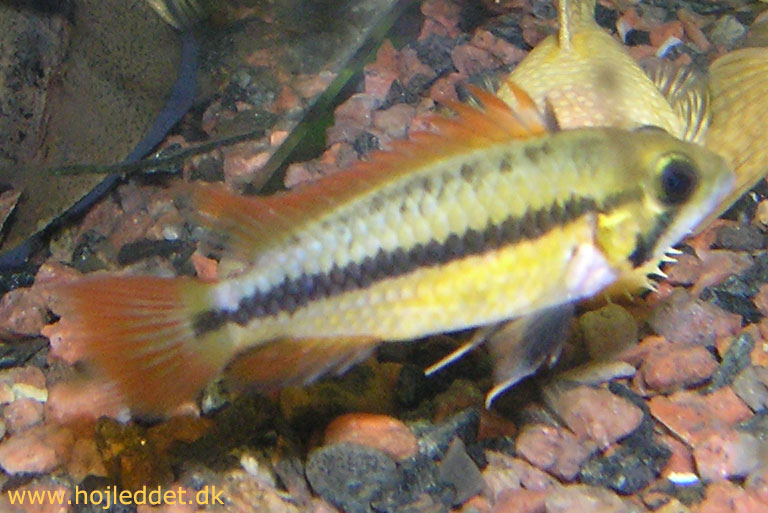
I briefly kept a pair of these cichlids, but unfortunately, they passed away shortly after I acquired them. This coincided with a period where my enthusiasm for the hobby was at a low point, and routine water changes were neglected. While I cannot say for certain if this was the cause, they only survived for 4-5 months in my care. This experience highlights that even hardy species require consistent maintenance.
Natural Habitat
Apistogramma cacatuoides is native to the upper Amazon basin, specifically in the tributaries of the Ucayali and Amazon rivers in Peru and Brazil. They are typically found in shallow, slow-moving creeks and rainforest streams where the substrate is covered in leaf litter. Unlike many other Apistogramma species that strictly require blackwater, A. cacatuoides is often found in clearer water conditions, making it more adaptable to various aquarium environments.
Behavior and Aquarium Care
For the aquarist, this fish offers fascinating behavior. The male is easily recognized by its spectacular dorsal fin, which resembles a cockatoo's crest. They are harem-spawners, meaning a single male should ideally be kept with multiple females, each having her own territory. The tank should be well-decorated with driftwood, plants, and caves to provide security and visual barriers.
Breeding
They are widely considered one of the easiest dwarf cichlids to breed. As cave spawners, the female will deposit her eggs inside a small cavity or coconut shell. After spawning, the female takes charge of the direct brood care, while the male patrols the larger territory. While they can breed in moderately hard water, softer and slightly acidic conditions will yield the best success rates for fry survival.